
Suburban rail is the missing layer in Bengaluru's transport system. Metro serves the core and the main employment corridors; suburban rail is designed to bring people in from Hoskote, Devanahalli, Rajanukunte, Chikkabanavara, Heelalige and Whitefield's outer edge using existing railway alignments. For property buyers, that changes which satellite towns are commutable.
Quick answer
The Bengaluru Suburban Rail Project is a roughly 148 km, four-corridor commuter rail network being implemented by K-RIDE, with 57 stations planned. Corridor-2 (Mallige, Benniganahalli–Chikkabanavara) and Corridor-4 (Kanaka, Heelalige–Rajanukunte) are being built first. Construction is underway; no corridor is fully operational yet.
Introduction
Key takeaways
- Network
- Approximately 148 km, four corridors
- Stations
- 57 planned
- Authority
- K-RIDE
- Priority corridors
- Mallige and Kanaka
- Status
- Under construction; not yet operational
- Main benefit
- Makes outer towns daily-commutable
Project status
Under construction (Corridors 2 and 4 prioritised)
Status reflects the latest publicly available information from the implementing authority. Proposed and approved stages are not the same as construction or operation — PropertyVest does not present a proposal as confirmed.
Quick facts
| Project | Bengaluru Suburban Rail |
|---|---|
| Type | Commuter / suburban rail |
| Location | Bengaluru metropolitan region |
| Approx. length | Approximately 148 km |
| Corridors | Sampige, Mallige, Parijaata, Kanaka (4 corridors) |
| Stations | 57 stations planned |
| Current status | Under construction (Corridors 2 and 4 prioritised) |
| Authority | Rail Infrastructure Development Company (Karnataka) Ltd — K-RIDE |
| Expected timeline | Phased commissioning; dates subject to K-RIDE revisions |
| Last updated | 11 September 2026 |
What is Bengaluru Suburban Rail?
The Bengaluru Suburban Rail Project (BSRP) uses and upgrades existing Indian Railways alignments to run frequent commuter services across the metropolitan region. It is implemented by K-RIDE, a joint venture between the Government of Karnataka and the Ministry of Railways, and comprises four corridors totalling roughly 148 km with 57 stations planned.
The four corridors are Sampige (KSR Bengaluru–Devanahalli), Mallige (Benniganahalli–Chikkabanavara), Parijaata (Kengeri–Whitefield) and Kanaka (Heelalige–Rajanukunte). Corridor-2 (Mallige) and Corridor-4 (Kanaka) were taken up first, with civil works, station buildings and rolling-stock procurement in progress.
Suburban rail differs from metro in ways that matter for property. It covers longer distances with fewer stops, so it makes outer towns viable for daily commuting rather than densifying the inner city. It also interchanges with metro at nodes such as Baiyappanahalli/Benniganahalli, Yeshwantpur and KSR Bengaluru, which means a suburban rail station becomes valuable in proportion to how easily riders can transfer.
Route & coverage
Corridor-1 Sampige: KSR Bengaluru – Yeshwantpur – Yelahanka – Doddajala – Devanahalli, serving the northern airport belt.
Corridor-2 Mallige: Benniganahalli – Banaswadi – Hebbal – Yeshwantpur – Chikkabanavara, a cross-city link through the north.
Corridor-3 Parijaata: Kengeri – KSR Bengaluru – Baiyappanahalli – Whitefield, the east–west spine.
Corridor-4 Kanaka: Heelalige – Karmelaram – Bellandur Road – Baiyappanahalli – Yelahanka – Rajanukunte, linking the southern Sarjapur side to the north.
Stations, junctions & corridors
| Station / junction | Locality | Corridor | Notes |
|---|---|---|---|
| KSR Bengaluru | Majestic | Sampige / Parijaata | Main interchange with metro |
| Yeshwantpur | Yeshwanthpur | Sampige / Mallige | Metro interchange |
| Hebbal | Hebbal | Mallige | North Bengaluru node |
| Devanahalli | Devanahalli | Sampige | Airport region terminus |
| Whitefield | Whitefield | Parijaata | Eastern IT belt |
| Karmelaram | Sarjapur Road | Kanaka | Serves Sarjapur Road belt |
| Heelalige | Electronic City | Kanaka | Southern terminus |
| Rajanukunte | Doddaballapur Road | Kanaka | Northern terminus |
Timeline
- 2020
Project approved by the Union Cabinet; K-RIDE appointed implementing agency
Confirmed - 2022–2024
Civil works begin on Corridor-2 (Mallige) and Corridor-4 (Kanaka)
Confirmed - Ongoing
Station construction, viaducts and rolling stock procurement in progress
In progress - Not confirmed
Full commissioning of all four corridors
Not confirmed
Timelines for large infrastructure projects change. Entries labelled expected or reported are not guaranteed completion dates.
Real estate impact
Property prices
Suburban rail tends to lift outer-node land values once services actually run, because a predictable 30–45 minute train ride replaces an unpredictable 90-minute road commute. Because commissioning is still ahead, buyers today are pricing an expectation. The most defensible purchases are in nodes that already have some employment or social infrastructure, so the property stands on its own if rail slips.
Rental market
Rental demand at outer stations is currently thin. It should deepen once services begin, particularly around Karmelaram and Heelalige, where tenants working on Sarjapur Road and in Electronic City would gain an alternative to road commuting. Interchange stations near metro — Benniganahalli, Yeshwantpur, Hebbal — are likely to see the earliest rental response.
Infrastructure may support prices, rentals and liquidity, but outcomes depend on delivery timelines, supply and broader market conditions. PropertyVest does not guarantee appreciation or returns.
Property price & rental context
Land along the suburban rail corridors — Chikkabanavara, Rajanukunte, Heelalige, Karmelaram, Devanahalli — is generally priced well below the ORR and metro belts, which is precisely the opportunity and the risk. PropertyVest publishes project prices only where a developer price sheet or RERA filing confirms them.
Localities connected to Bengaluru Suburban Rail
Projects in areas connected to this infrastructure
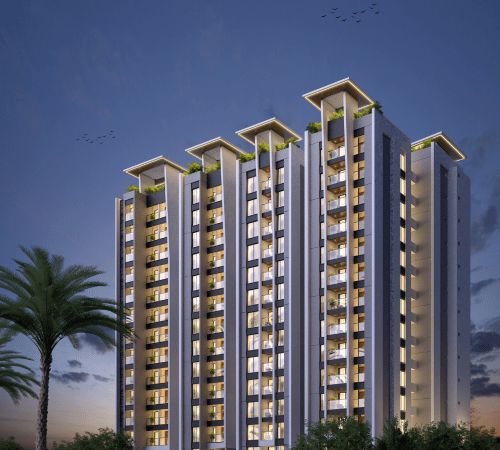
Habulus Oasis Grove
Habulus Groups · Electronic City
- Configurations: Details being verified
- Price: ₹1.13 Cr
- RERA: Details being verified
- Status: New Launch

Aarohana Devanahalli Square
Aarohana Groups · Devanahalli
- Configurations: 2 BHK, 3 BHK, 4 BHK Duplex
- Price: ₹0.85 Cr
- RERA: Details being verified
- Status: New Launch
Orchid South Park
Goyal & Co · Electronic City
- Configurations: Details being verified
- Price: ₹1.44 Cr
- RERA: PRM/KA/RERA/1251/308/PR/060526/008625
- Status: New Launch
Elv The Ivory Terraces
ELV Projects · Whitefield
- Configurations: Details being verified
- Price: ₹1.10 Cr
- RERA: PRM/KA/RERA/1251/446/PR/181122/005469
- Status: New Launch
Habulus Tranquil
Habulus Group · Electronic City
- Configurations: 2 BHK, 2.5 BHK, 3 BHK
- Price: ₹0.98 Cr
- RERA: PRM/KA/RERA/1251/310/PR/020126/008378
- Status: Under Construction
Elegant Atmos
Elegant Builders and Developers · Yelahanka New Town
- Configurations: 3 BHK, 3.5 BHK
- Price: ₹1.87 Cr
- RERA: PRM/KA/RERA/1251/309/PR/200825/008010
- Status: Under Construction
Investment outlook
Practical approach:
- Favour nodes with an existing employment or education base over pure land plays.
- Check the distance to the actual station building, not the railway line.
- Assume a multi-year hold; commissioning dates for large rail projects commonly move.
- Verify approvals: outer nodes fall under different planning authorities, and layout approvals vary in quality.
Potential benefits
- Uses existing rail alignments, reducing land acquisition need
- Brings outer towns within daily commuting range
- Interchanges with metro at several major nodes
- Reduces road congestion on radial highways
- Opens affordable entry points for long-term buyers
Risks & considerations
- No corridor is operational yet; timelines can shift
- Outer nodes have limited social infrastructure today
- Rental demand is thin until services begin
- Service frequency will determine actual usefulness
- Land-only purchases can be illiquid
PropertyVest publishes risks alongside opportunity. Infrastructure timelines and property outcomes are not guaranteed.
Conclusion
When the first corridor carries commuters, expect a step change in how Bengaluru''s outer nodes are valued — much as the Yellow Line changed the conversation on Hosur Road. Until then, treat suburban rail as a credible, funded, under-construction upgrade that justifies patience rather than a premium.
Frequently asked questions
Is Bengaluru suburban rail operational?
No. Construction is underway, with Corridor-2 (Mallige) and Corridor-4 (Kanaka) prioritised. No corridor is fully operational yet.
How many corridors and stations are planned?
Four corridors — Sampige, Mallige, Parijaata and Kanaka — spanning roughly 148 km with 57 stations planned.
Who is building the suburban rail project?
K-RIDE, a joint venture between the Government of Karnataka and the Ministry of Railways.
How is suburban rail different from metro?
Suburban rail runs longer distances with fewer stops on existing railway alignments, connecting outer towns; metro provides dense intra-city coverage. They interchange at nodes such as KSR Bengaluru, Yeshwantpur and Benniganahalli.
Which localities benefit most?
Chikkabanavara, Rajanukunte, Yelahanka, Devanahalli, Hebbal, Whitefield, Karmelaram on Sarjapur Road and Heelalige near Electronic City.
Should I buy near a suburban rail station now?
Only with a multi-year view and on locations that make sense today. Since no corridor is running, any price premium is based on expectation.
Sources & verification
Last verified: 8 September 2026
Not sure how this corridor affects the property you're considering?
Talk to a PropertyVest advisor for a locality-specific read on connectivity, pricing and rental demand.